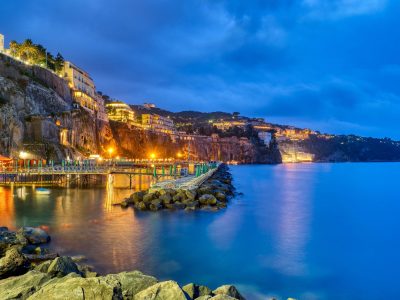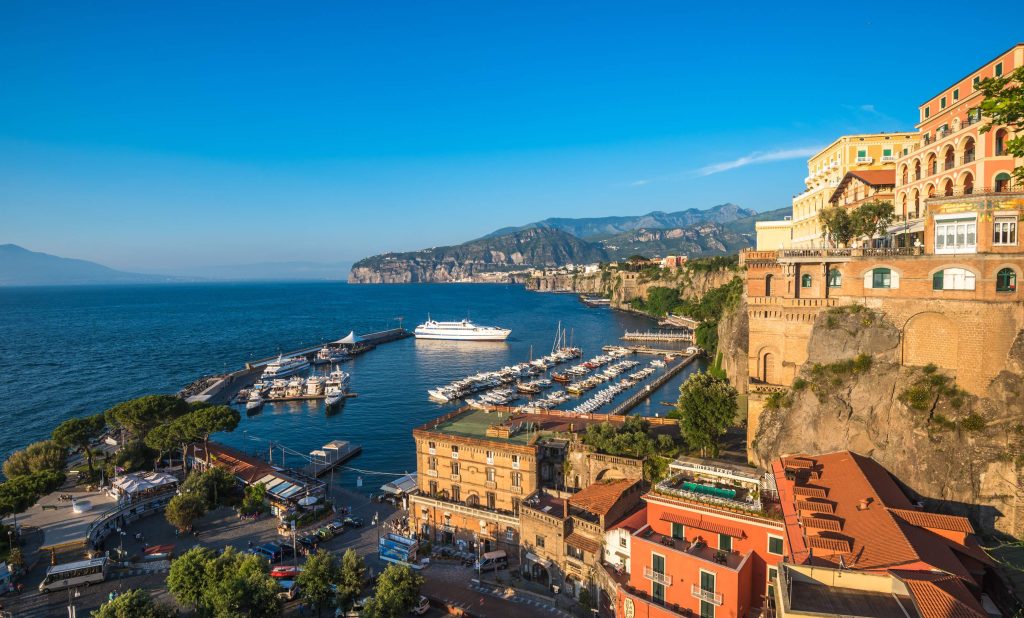
Sorrento isn’t just a gateway to the surrounding beauty; it’s a gem that deserves to be experienced at a slow pace. Perched on a tuff cliff overlooking the sea, it enchants visitors with its citrus scents, historic alleys, and breathtaking views of the Gulf of Naples.
The Historic Center and Piazza Tasso
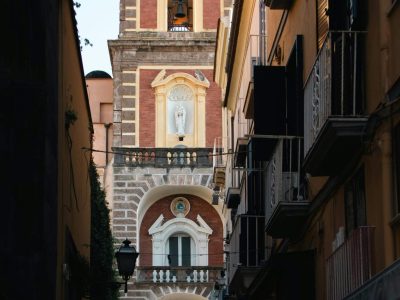
The beating heart of Sorrento is Piazza Tasso, dedicated to the famous Sorrentine poet. From here, a labyrinth of characteristic narrow streets branches out, where the air smells of lemons and local craftsmanship. Strolling through the historic center means getting lost among shops selling handmade sandals, wood inlay workshops, and small Limoncello stores. Don’t forget to stop at the Sedile Dominova, the only ancient noble seat in the area still visible, decorated with splendid frescoes and a majolica dome that is a true architectural jewel.
Marina Grande
If you’re looking for Sorrento’s authentic seafaring soul, you must head down to Marina Grande. This ancient fishing village, separated from the rest of the city, seems frozen in time. With its colorful houses, moored boats, and seafood restaurants overlooking the water, it’s the perfect spot for a romantic dinner at sunset. This is where iconic Italian films were shot, such as “Pane, Amore e…” starring Sophia Loren, a testament to the timeless charm of this corner of paradise.
The Cloister of San Francesco and the Villa Comunale
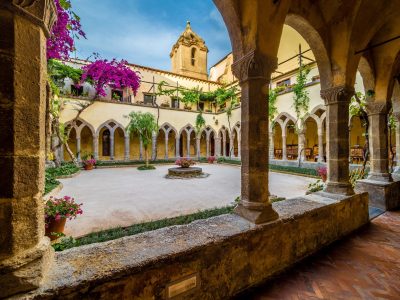
For a moment of peace and beauty, the Cloister of San Francesco is a must-see. This 14th-century cloister blends different styles, from Arabesque to Late Gothic, creating a magical and silent atmosphere that often hosts weddings and concerts. Right next door is the Villa Comunale, a terrace overlooking the sea that offers one of the most iconic views in the area: from here, your gaze sweeps from the entire Gulf of Naples to the silhouette of Mount Vesuvius, providing an unforgettable postcard of the land of the sirens.
The Valley of the Mills
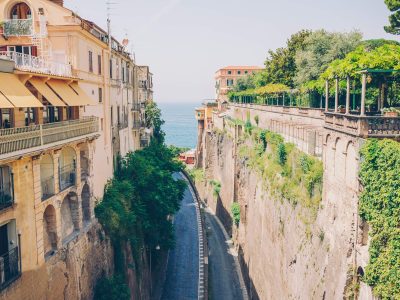
Right behind Piazza Tasso lies a deep and suggestive natural fissure: the Valley of the Mills (Vallone dei Mulini). It is an ancient crack in the rock that houses the remains of a 17th-century wheat mill. Today the site is abandoned, but the lush, almost tropical vegetation covering the ruins has transformed it into a fairytale-like and mysterious place, visible from the road above—perfect for a unique photo.
The Queen Joan’s Baths
A short distance from the center, on the tip of Capo di Sorrento, lies one of the most evocative spots on the entire peninsula: Bagni della Regina Giovanna (Queen Joan’s Baths). It is a natural pool enclosed by limestone cliffs, connected to the open sea by a striking rock arch.
The name comes from the legend that Queen Joan d’Anjou, in the 14th century, loved to retreat to these secluded waters for her private baths. But the magic doesn’t end there: the site also hosts the remains of the massive Villa Pollio Felice, an ancient Roman residence from the 1st century BC. Walking among the archaeological ruins overlooking the blue sea is an experience that combines untouched nature with ancient history.
The path to reach them is a pleasant walk through olive groves and Mediterranean scents, rewarded by a panorama that, at sunset, becomes simply unforgettable. It’s the ideal place for a refreshing dip away from the classic beach clubs.
Expert Tip:
Limoncello Tasting
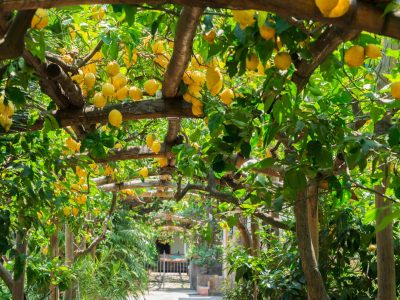
You can’t say you’ve visited Sorrento without tasting its “liquid gold.” Sorrento Limoncello PGI, produced exclusively with the peninsula’s oval lemons, is a post-meal ritual. I recommend visiting one of the many lemon gardens (the famous citrus groves under wooden pergolas) in the historic center: many offer free tastings where you can discover the difference between artisanal and commercial liqueur, immersing yourself in the intense scent of freshly cut peels.
The Art of Inlay: The Song of Wood
Beyond the flavors, Sorrento guards a treasure made of skilled hands and precious woods: Sorrentine inlay. This ancient art, which dates back to the 19th century, transforms simple pieces of walnut, olive, and orange wood into true works of art.
Strolling through the alleys, you can catch a glimpse of master craftsmen at work in their shops, intent on composing tiny wood mosaics that bring landscapes, scenes of daily life, or complex geometric designs to life. From the famous music boxes playing “Torna a Surriento” to finely decorated furniture, inlay represents the noble and patient soul of the city. A visit to the Museo Bottega della Tarsia Lignea will allow you to admire historical collections and understand the evolution of this extraordinary technique, which still makes “Made in Sorrento” famous worldwide.